RecipePreferences
I identified the problem, built the case for prioritisation, and led the initiative end to end across two separate teams. The experiment ran for six weeks at 95% confidence. It won, delivering a +10% uplift in checkout conversion rate across two brands and six markets, while simultaneously reducing skip rate and churn on the retention side.
I started this.
I led it end to end.Across two teams.
This initiative was my idea. I identified the problem through data, built the prioritisation case, and presented it to the Head of Product to get it on the roadmap. From there I owned the project from discovery through delivery as the sole designer across two separate teams and both brands.
The feature served two goals with two different stakeholders. The Growth team needed it to move conversion. The Retention team needed it to reduce skip rate and churn. I was the link between them, aligning both on a single solution, a shared design system, and one ship.
For a significant portion of the project I was also operating without a Growth team Product Manager, partnering directly with the Engineering Manager to define scope, drive decisions, and keep the initiative moving.
discovery
Problem definition, GA drop-off analysis, Hotjar VoC, competitor research
strategy
Hypothesis writing, test brief, scope definition, stakeholder alignment
design
Web funnel, account area, iOS app for Marley Spoon and Dinnerly
systems
New components added to design system post-ship, selection pattern standardised
The drop-off was loud.
The reason was clear.
The /select-plan page was the first step in a four-step funnel: Plan, Account, Delivery, Checkout. It had a 54% abandonment rate. Users who left at this step mostly didn't come back.
I pulled the funnel data from Google Analytics to identify where the biggest drop-off was happening. To understand why, I set up a Hotjar VoC study myself: I wrote the questions, ran the study, and analysed 500+ responses in Excel. I wrote up the findings in a data report and used it to build the prioritisation case.
The signal was consistent: 70% of Hotjar responses were menu-related. Users couldn't evaluate whether Marley Spoon would fit their diet, taste, or lifestyle before committing to a plan. They were being asked to subscribe before they had any confidence the product was for them.
I also conducted a competitor audit. Leading meal kit brands were already surfacing personalised meal plan selection from the very first funnel step. The gap was clear. I took the report to the Head of Product and made the case.
Two teams. Two hypotheses.One solution.
As the feature touched both acquisition and retention, I wrote separate hypotheses for each team. Defining both hypotheses upfront meant that a single design solution had to work for two different contexts: the acquisition funnel and the account area. It also had to satisfy two different sets of success metrics. That shaped every decision that followed.
Growth Hypothesis
If we allow new customers to select their recipe preferences early in the funnel, then we expect an increase in conversion rate, because customers are more likely to subscribe when they can see their dietary needs are met before they commit.
Retention Hypothesis
If existing customers can select their recipe preferences in their account area, then they will be less likely to skip a delivery or churn, because they will be more satisfied with their auto-generated order when it reflects their actual taste and dietary preferences.
The direction I rejected.
Before committing to the card-based approach, I explored a photo-led direction, showing images of the meal categories rather than icons. I moved away from it because photos would have been unsustainable at scale. Category sets differ across brands and markets, and a photo-dependent component would have created a significant maintenance burden across six markets and two design systems. Icons gave us the flexibility to adapt and grow without rebuilding.
Control vs Variant
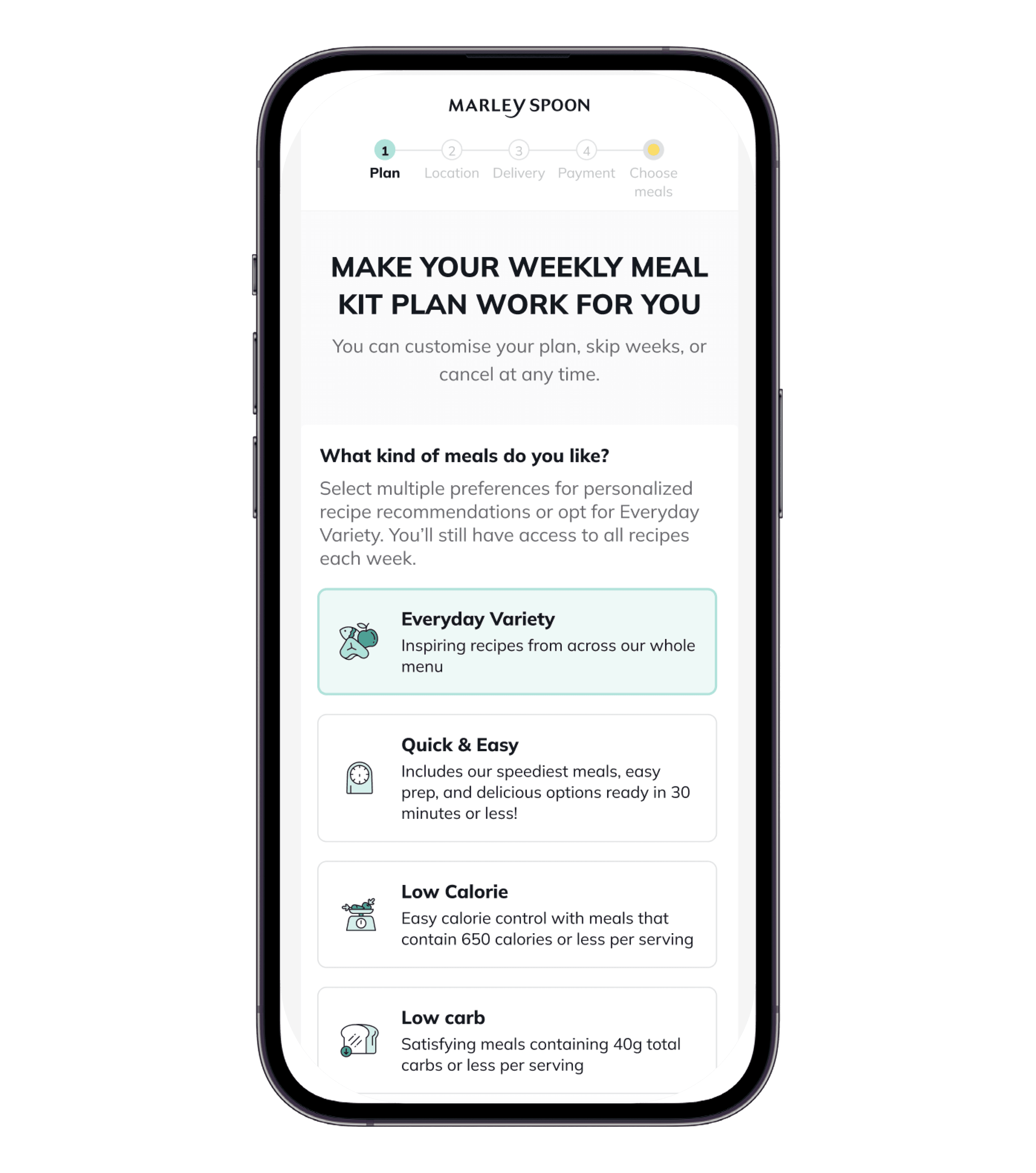
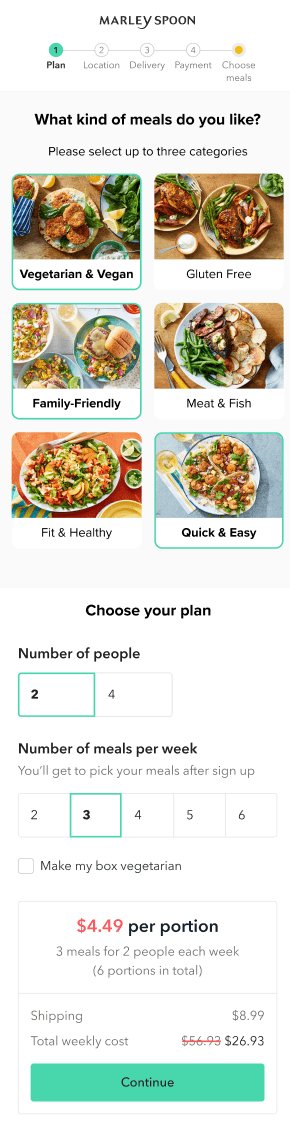
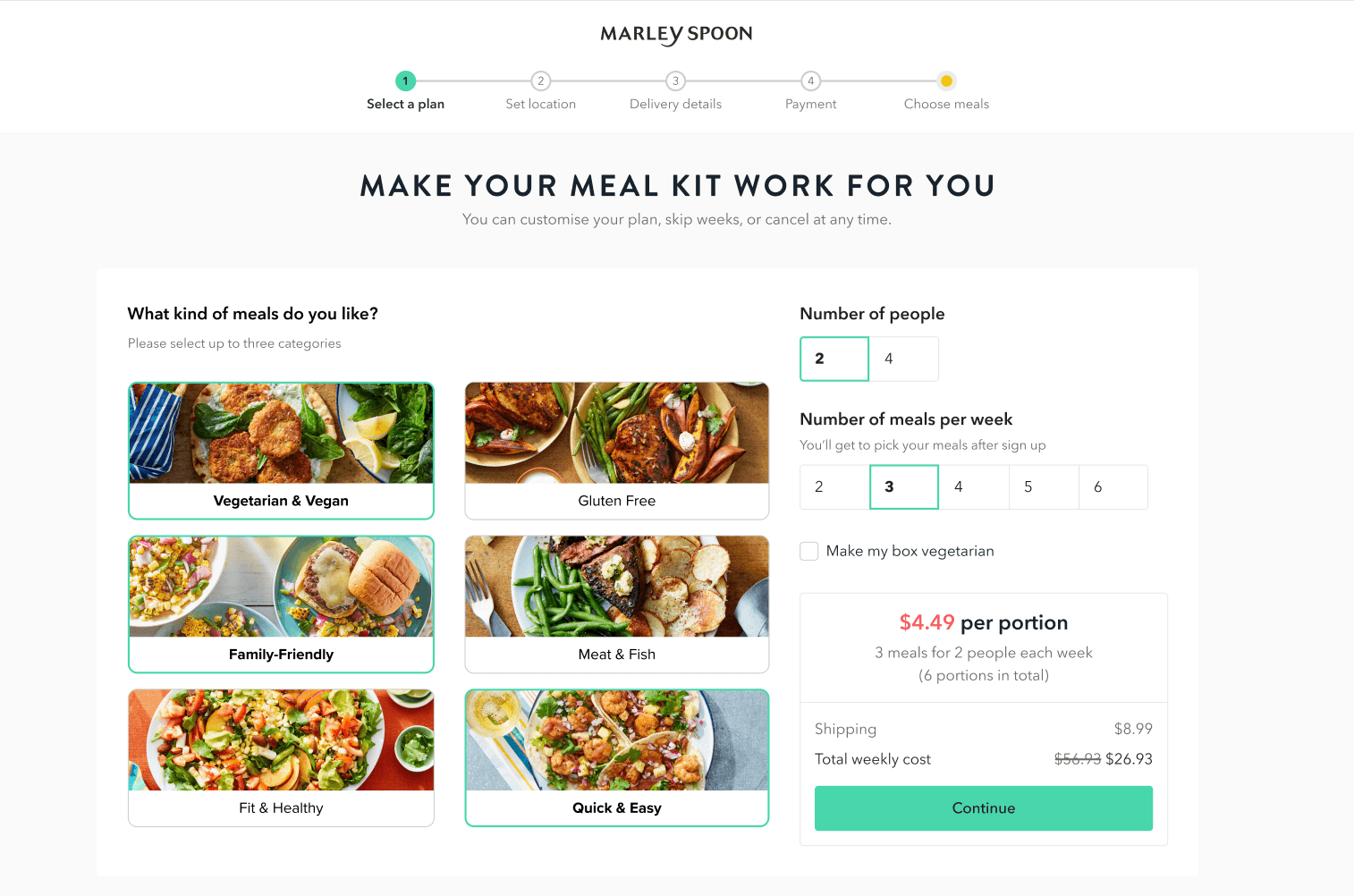
The variant added dietary preference cards above the plan configuration, reducing post-funnel friction while adding a personalisation signal upfront.
No preference selection. Plan configuration only.

Dietary preference cards added.

Same logic, different brand.
Dinnerly is a more budget and family-focused brand. I adapted the category set and applied Dinnerly's visual language throughout. Both brands shared the same underlying selection logic.
Dinnerly control. No preferences.
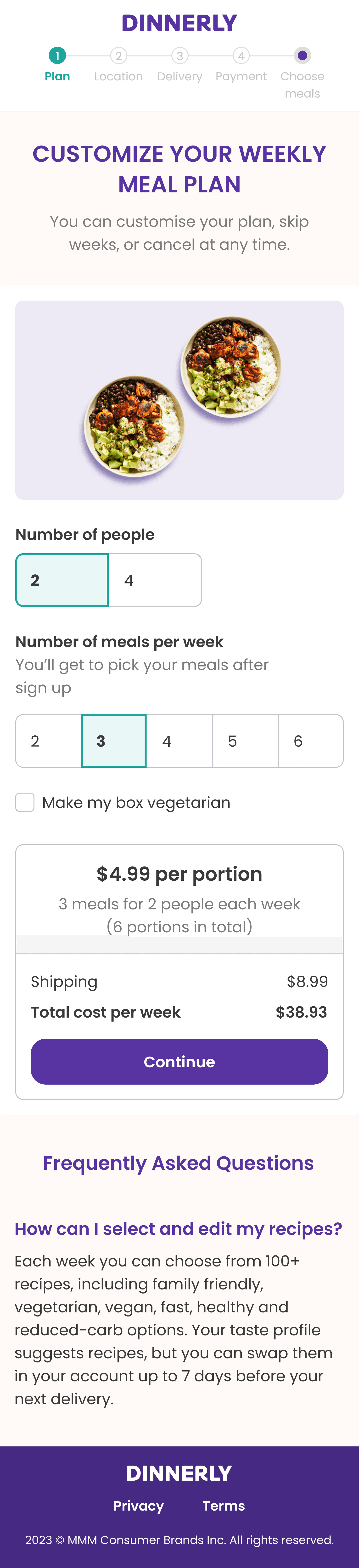
Dinnerly variant. Brand-adapted preference cards.

Responsive acrossall breakpoints.
At desktop width, preference cards sit in a two-column layout alongside the plan configuration, keeping the conversion action always visible without scrolling.
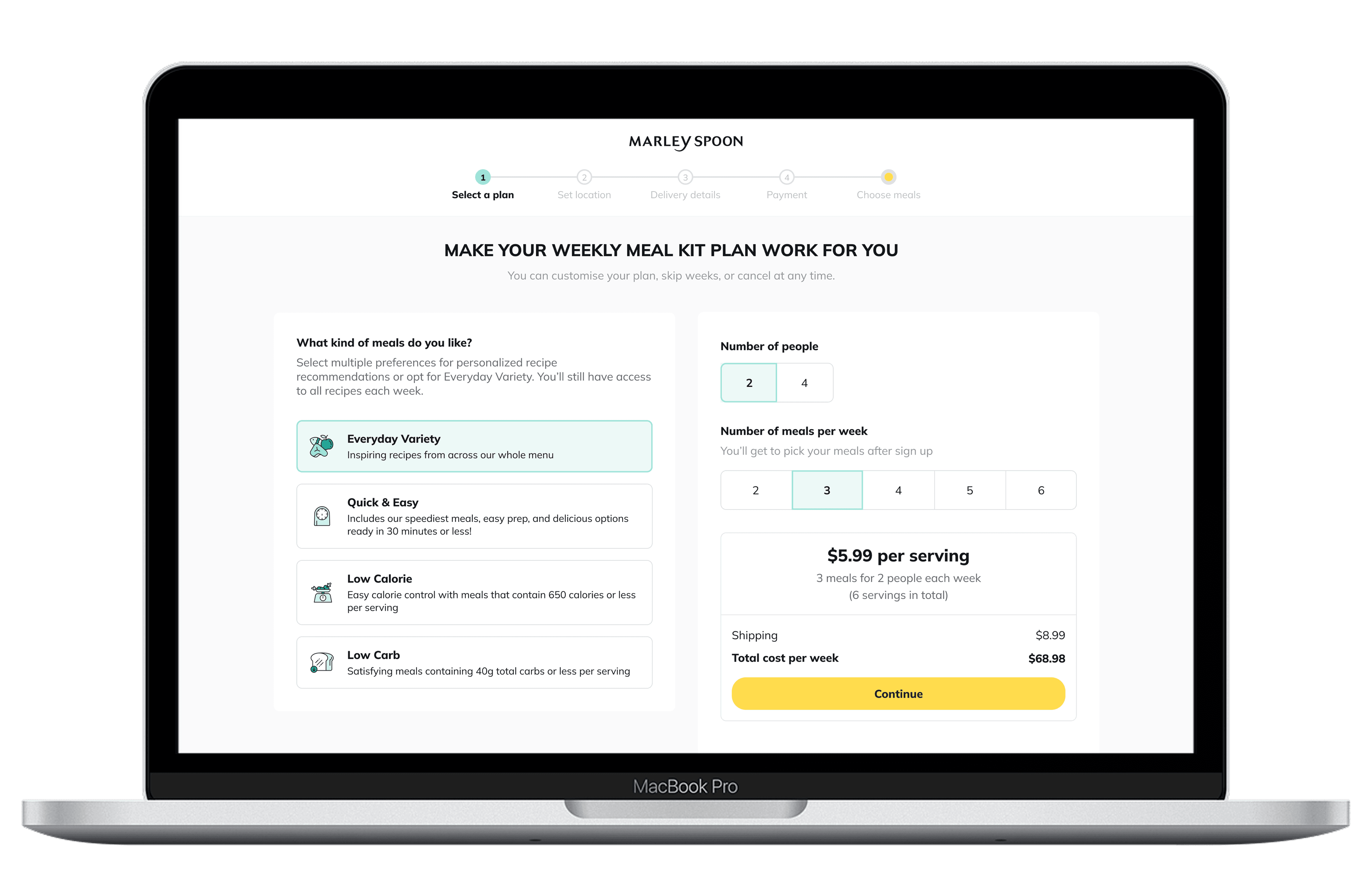
The interface resolves contradictions so users don't have to.
These decisions were mine. Each one resolved a real constraint between the UI, the data model, and the engineering implementation.
I defined categories as a union, not an intersection
Selecting Vegetarian + Kid-Friendly returns recipes that match either, not both. An intersection model would have produced too few results. I made this call and aligned Engineering on the implementation.
I defined Everyday Variety as a reset state
Everyday Variety means 'no preference, show me everything.' Selecting it deselects all others; selecting any other category deselects it. A precise UI behaviour that matched the underlying data model exactly.
I defined that Vegetarian disables protein selection
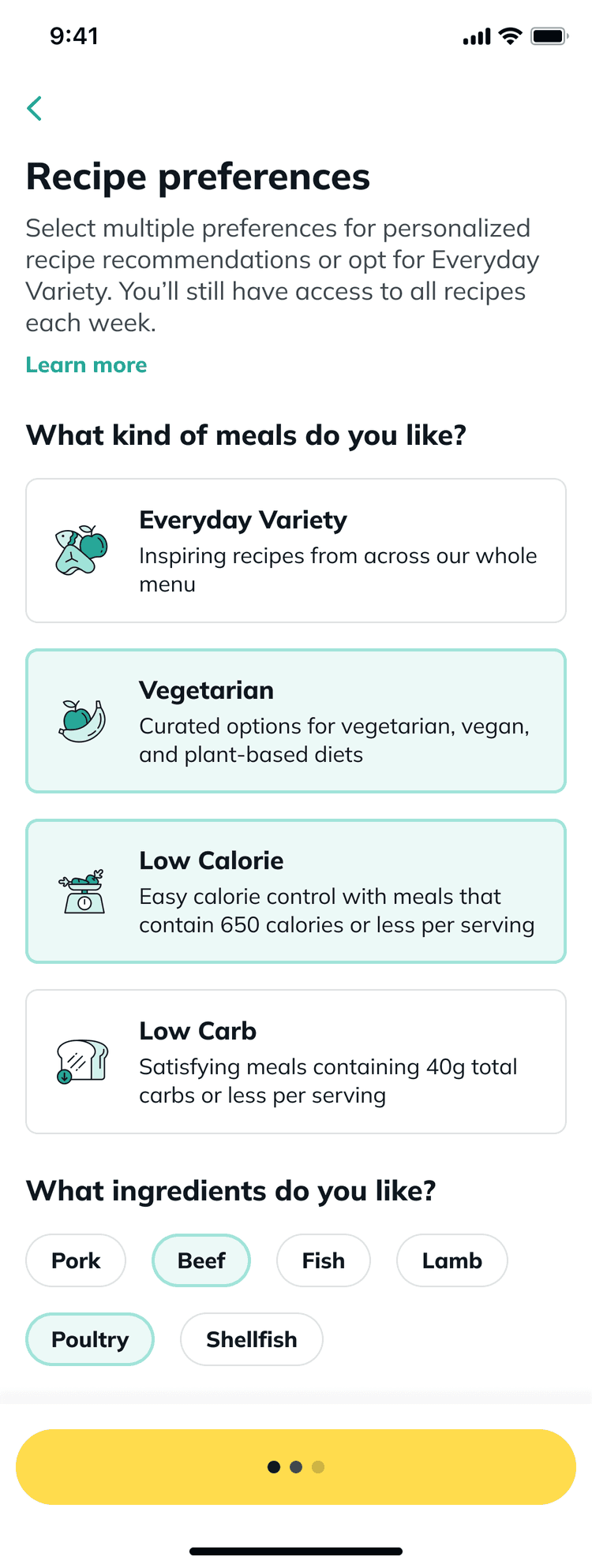
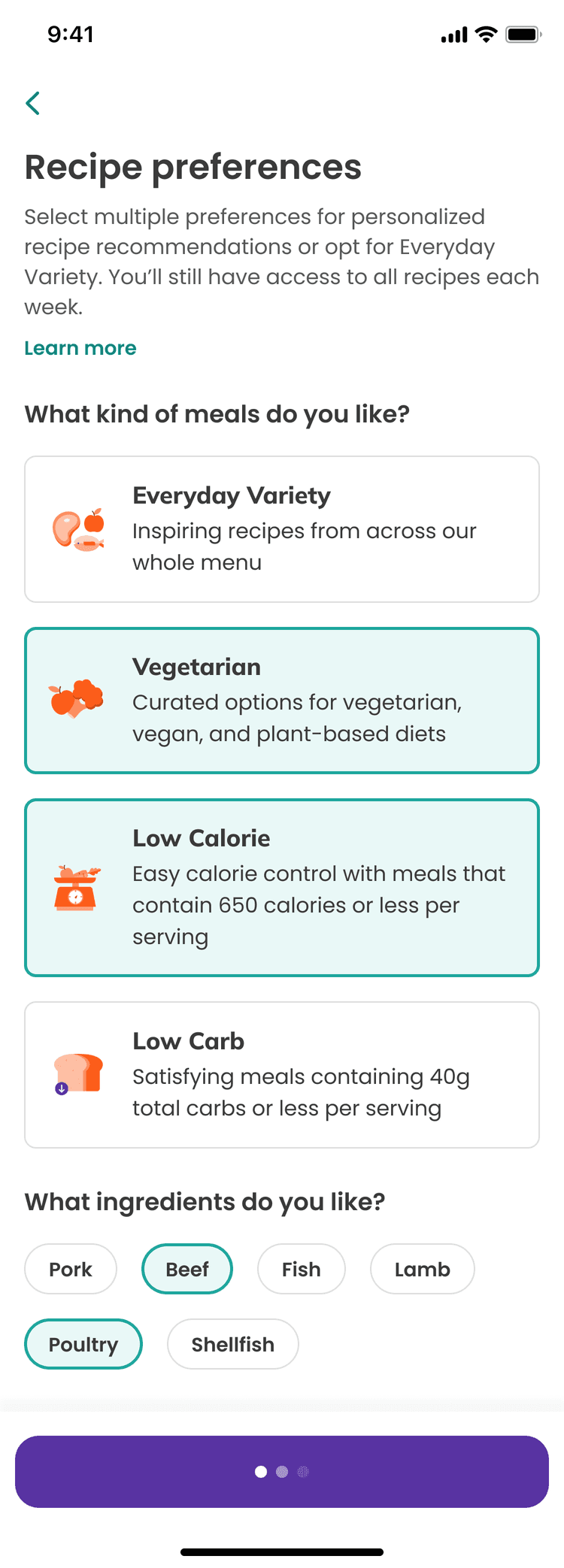
In the account area, selecting Vegetarian or Vegan automatically disables protein preferences, because allowing both would create contradictory selections. The interface removes that burden from the user.
Cross-platform.Both brands.
I designed the iOS account area for both brands, applying the same selection logic while adapting to native mobile patterns and each brand's visual identity.
Shipping was step one.
Formalising was step two.
After Recipe Preferences shipped, I added the new components to the Marley Spoon design system, the preference card, ingredient preference pills, and selection states, so they could be used consistently by other teams across web and iOS.
I also updated existing selector components across the system to follow the same visual rules: green outline for selected state, pale green for hover. Rather than leaving the new pattern as a one-off, I propagated it system-wide.
The test won.Both hypotheses were validated.
+10%
Conversion rate uplift on completed checkout, across both brands and six markets. The test ran for six weeks at 95% statistical confidence.
-15%
Drop-off rate on the select-plan page.
Retention
Positive results on skip rate, churn rate, and feature engagement rate, validating the retention hypothesis alongside the growth result.
What I'd do differently.
This project clarified something important about how I want to work: the most durable solutions are the ones that solve for multiple stakeholders at once, not just the loudest one in the room. Designing for both Growth and Retention with a single feature, and having both hypotheses validated, was the most complex coordination challenge I had owned to that point.
This project reinforced the value of validating with data before committing to a full build. Starting with a focused A/B test gave the team confidence and stakeholder alignment before scaling across all surfaces and markets.
Operating without a PM was challenging but clarifying. It pushed me to develop stronger instincts around prioritisation, stakeholder communication, and how to keep a complex initiative moving without a dedicated owner.